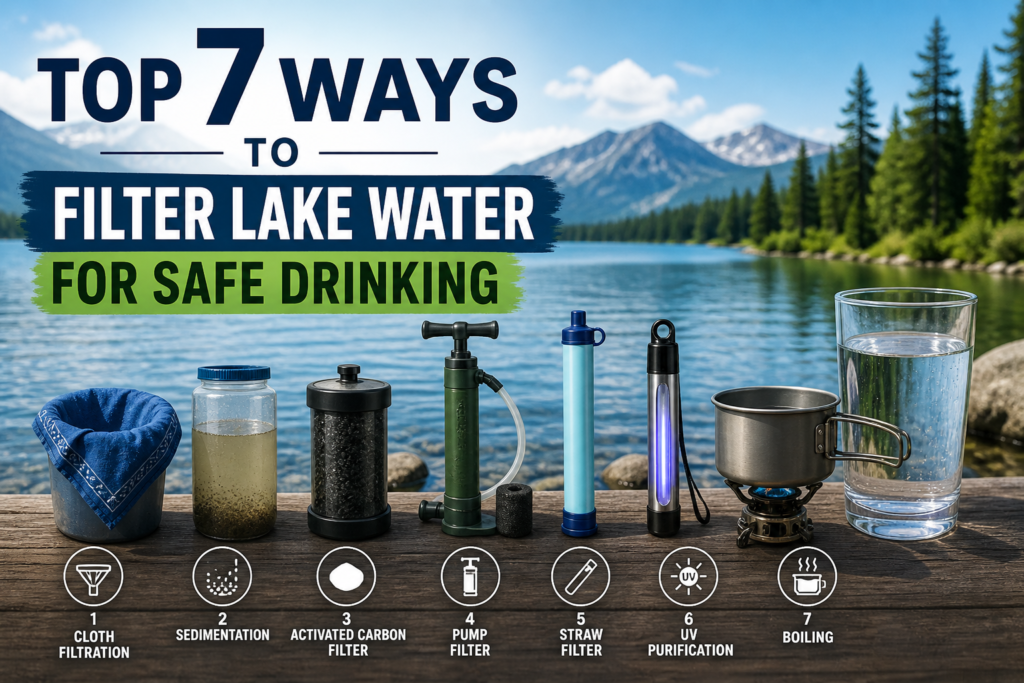
Clean drinking water is one of the most important necessities for survival, especially during outdoor adventures, camping trips, hiking, or emergency situations. Lakes may look clean and refreshing from the surface, but the water often contains harmful bacteria, parasites, viruses, dirt, and chemical pollutants that can make you seriously sick if consumed without treatment.
Many people assume that clear lake water is naturally safe to drink. Unfortunately, this is not true. Even crystal-clear water can contain invisible microorganisms such as Giardia, E. coli, and Cryptosporidium. These contaminants can cause stomach infections, diarrhea, vomiting, dehydration, and other dangerous health problems.
That is why learning how to properly filter and purify lake water is extremely important. Whether you are a camper, traveler, survivalist, or someone preparing for emergencies, knowing reliable water filtration methods can protect your health and even save lives.
In this guide, you will learn the top 7 ways to filter lake water for safe drinking. We will cover simple DIY methods, portable filtration tools, advanced purification techniques, and practical safety tips to help you choose the best solution for any situation.
By the end of this article, you will understand:
- Why untreated lake water is dangerous
- Which filtration methods work best
- The pros and cons of each method
- How to combine multiple techniques for maximum safety
Let’s start by understanding why you should never drink untreated lake water directly from a lake.
Clean drinking water is one of the most important necessities for survival, especially during outdoor adventures, camping trips, hiking, or emergency situations. Lakes may look clean and refreshing from the surface, but the water often contains harmful bacteria, parasites, viruses, dirt, and chemical pollutants that can make you seriously sick if consumed without treatment.
Many people assume that clear lake water is naturally safe to drink. Unfortunately, this is not true. Even crystal-clear water can contain invisible microorganisms such as Giardia, E. coli, and Cryptosporidium. These contaminants can cause stomach infections, diarrhea, vomiting, dehydration, and other dangerous health problems.
That is why learning how to properly filter and purify lake water is extremely important. Whether you are a camper, traveler, survivalist, or someone preparing for emergencies, knowing reliable water filtration methods can protect your health and even save lives.
In this guide, you will learn the top 7 ways to filter lake water for safe drinking. We will cover simple DIY methods, portable filtration tools, advanced purification techniques, and practical safety tips to help you choose the best solution for any situation.
By the end of this article, you will understand:
- Why untreated lake water is dangerous
- Which filtration methods work best
- The pros and cons of each method
- How to combine multiple techniques for maximum safety
Let’s start by understanding why you should never drink untreated lake water directly from a lake.
Table of Contents
Method #1: Cloth Filtration
Cloth filtration is one of the oldest and simplest ways to filter lake water. While it is not a complete purification method, it can help remove large particles such as dirt, leaves, insects, and sediment from the water before using more advanced purification techniques.
This method is especially useful in emergency situations when you do not have access to professional water filters.
What Is Cloth Filtration?
Cloth filtration involves pouring lake water through a clean piece of fabric to trap visible debris and larger particles. Common materials used include:
- Cotton cloth
- Bandanas
- T-shirts
- Coffee filters
- Cheesecloth
The fabric acts as a basic physical barrier that improves the clarity of the water.
How Cloth Filtration Works
The process is simple and requires very little equipment.
Step-by-Step Process
- Find a clean container or bottle.
- Fold the cloth several times to create thicker filtration layers.
- Place the cloth over the top of the container.
- Slowly pour lake water through the cloth.
- Allow the filtered water to collect in the container.
If the water is extremely muddy, you can repeat the process multiple times using a cleaner section of cloth.
What Cloth Filtration Removes
Cloth filtration can help remove:
- Dirt
- Mud
- Sand
- Leaves
- Insects
- Some algae particles
This improves the appearance and taste of the water while preparing it for additional purification.
What Cloth Filtration Cannot Remove
This method does not eliminate:
- Bacteria
- Viruses
- Parasites
- Chemicals
- Heavy metals
Because harmful microorganisms remain in the water, cloth filtration alone is not safe enough for drinking.
You should always combine it with:
- Boiling
- UV purification
- Chemical treatment
- Advanced filters
Advantages of Cloth Filtration
Easy and Free
Most people already carry some type of cloth or fabric.
Great for Emergencies
Useful when no proper filter is available.
Improves Other Filtration Methods
Removing large particles helps prevent clogging in advanced filters.
Lightweight and Portable
Perfect for camping, hiking, and survival kits.
Disadvantages of Cloth Filtration
Limited Protection
It only removes visible debris.
Not Safe Alone
Water still contains dangerous microorganisms after filtering.
Requires Clean Fabric
Dirty cloth can introduce additional contamination.
Best Situations to Use Cloth Filtration
Cloth filtration works best for:
- Emergency survival situations
- Pre-filtering muddy lake water
- Camping and hiking trips
- Preparing water for boiling or UV treatment
It should always be considered the first step in a multi-stage water purification process rather than a complete solution.
In the next section, we will discuss another simple but effective method called sedimentation, which helps separate dirt and particles naturally.
Method #2: Sedimentation Method
Sedimentation is a simple water-cleaning technique that allows dirt, sand, and heavy particles to settle at the bottom of a container over time. This method has been used for centuries as a basic way to improve water clarity before further purification.
Although sedimentation alone cannot make lake water completely safe to drink, it is very effective as a first step in the filtration process, especially when dealing with muddy or cloudy water.
What Is the Sedimentation Method?
The sedimentation method works by using gravity to separate heavy particles from water. When lake water is left undisturbed in a container, larger debris slowly sinks to the bottom while cleaner water remains near the top.
This natural process helps reduce:
- Mud
- Sand
- Silt
- Organic debris
- Some algae particles
The cleaner upper layer can then be carefully transferred for further treatment.
How Sedimentation Works
Sedimentation requires very little equipment and can be done almost anywhere.
Step-by-Step Process
- Collect lake water in a bucket, bottle, or container.
- Place the container on a stable surface.
- Leave the water undisturbed for several hours.
- Allow heavy particles to settle at the bottom.
- Slowly pour the clearer top water into another clean container.
Be careful not to disturb the sediment while pouring.
For very dirty water, the process may need to be repeated more than once.
How Long Should You Let Water Settle?
The settling time depends on how dirty the water is.
Recommended Settling Times
- Slightly cloudy water: 30 minutes to 1 hour
- Muddy water: 2 to 6 hours
- Extremely dirty water: Overnight settling may work best
The longer the water remains still, the more particles will sink.
What Sedimentation Removes
Sedimentation can reduce:
- Mud
- Sand
- Dust
- Small debris
- Cloudiness
This makes the water look cleaner and improves the effectiveness of later filtration methods.
What Sedimentation Cannot Remove
This method does not eliminate:
- Bacteria
- Viruses
- Parasites
- Chemicals
- Dissolved contaminants
Even after sedimentation, the water is still unsafe to drink without proper purification.
Advantages of the Sedimentation Method
Very Simple
No special tools or expensive equipment required.
Useful for Muddy Water
Helps clear heavily contaminated lake water.
Improves Filter Performance
Cleaner water prevents advanced filters from clogging quickly.
No Energy Required
Works naturally using gravity.
Disadvantages of Sedimentation
Slow Process
It can take several hours to work properly.
Limited Purification
Only removes heavy particles and debris.
Requires Additional Treatment
Water must still be boiled, filtered, or disinfected.
Tips for Better Sedimentation Results
To improve effectiveness:
- Use larger containers for better settling
- Avoid shaking or moving the container
- Pour water slowly after settling
- Combine with cloth filtration or carbon filters
Some survival experts also recommend adding natural coagulants like crushed seeds from certain plants to speed up sediment settling, though this is less common.
Best Situations to Use Sedimentation
Sedimentation works best for:
- Muddy or cloudy lake water
- Survival situations
- Camping trips
- Pre-treatment before boiling or advanced filtration
It is one of the easiest ways to improve dirty water before using more reliable purification methods.
In the next section, we will explore activated carbon filters and how they help improve water taste, smell, and overall quality.
Please Note:
Drinking clean water is very important for our life, it has many benefits, if you do not know the benefits of drinking clean water, then you must read this article: 7 Health Benefits of Drinking Pure Water
Method #3: Activated Carbon Filter
Activated carbon filtration is one of the most popular and effective methods for improving the quality of lake water. These filters are widely used in portable water bottles, home filtration systems, camping gear, and emergency survival kits because they help remove impurities, odors, and unpleasant tastes from water.
While activated carbon filters alone may not remove every harmful microorganism, they play an important role in a complete water purification system.
What Is an Activated Carbon Filter?
An activated carbon filter uses specially treated carbon material with millions of tiny pores that trap contaminants as water passes through it.
The carbon is usually made from:
- Coconut shells
- Wood
- Coal
- Charcoal
The activation process creates a highly porous surface capable of absorbing many harmful substances from water.
How Activated Carbon Filtration Works
Activated carbon works through a process called adsorption.
In adsorption:
- Contaminants stick to the surface of the carbon
- Chemicals and impurities become trapped inside microscopic pores
- Cleaner water passes through the filter
This process helps improve both water safety and taste.
What Activated Carbon Filters Remove
Activated carbon filters are highly effective at reducing:
- Bad odors
- Unpleasant tastes
- Chlorine
- Some chemicals
- Organic compounds
- Sediment
- Certain pesticides
They can also improve the smell and appearance of lake water significantly.
What Activated Carbon Filters Cannot Fully Remove
Basic activated carbon filters may not completely eliminate:
- Viruses
- Some bacteria
- Heavy metals
- Dissolved salts
That is why many outdoor water systems combine activated carbon with additional filtration technologies such as ceramic filters or UV purification.
Types of Activated Carbon Filters
Granular Activated Carbon (GAC)
- Loose carbon particles
- Common in portable camping filters
Carbon Block Filters
- Densely packed carbon
- Better filtration efficiency
- Longer-lasting performance
Combination Filters
- Combine carbon with membrane or ceramic filtration
- Provide better protection against microorganisms
Advantages of Activated Carbon Filters
Improves Taste and Odor
Lake water often smells earthy or stale. Carbon filtration greatly improves drinking quality.
Portable and Convenient
Many compact camping filters use activated carbon technology.
Effective Chemical Reduction
Helps reduce exposure to certain harmful chemicals.
Easy to Use
Most systems require minimal setup and maintenance.
Disadvantages of Activated Carbon Filters
Limited Virus Protection
Basic carbon filters may not fully remove viruses.
Filters Need Replacement
Over time, carbon becomes saturated and loses effectiveness.
Not a Complete Purification Solution
Additional treatment may still be required for maximum safety.
Best Ways to Use Activated Carbon Filters
Activated carbon filtration works best when combined with:
- Cloth filtration
- Sedimentation
- UV purification
- Boiling
- Ceramic or membrane filters
Using multiple purification steps creates safer drinking water.
Best Situations for Activated Carbon Filters
These filters are ideal for:
- Camping trips
- Hiking adventures
- Emergency preparedness
- Outdoor survival kits
- Improving water taste during travel
Many modern portable filtration bottles and survival systems rely heavily on activated carbon because of its lightweight design and strong purification capabilities.
In the next section, we will discuss pump water filters, one of the most reliable filtration options for outdoor activities and wilderness survival.
Method #4: Pump Water Filters
Pump water filters are one of the most reliable and widely used methods for filtering lake water in outdoor environments. They are especially popular among campers, hikers, backpackers, and survival experts because they provide fast and effective filtration without requiring electricity.
These portable systems can remove many dangerous contaminants and produce cleaner drinking water directly from lakes, rivers, and streams.
What Is a Pump Water Filter?
A pump water filter is a manual filtration device that forces water through a special filter using a hand-operated pump.
The system usually includes:
- An intake hose placed in the lake
- A hand pump mechanism
- An internal filter cartridge
- An output hose for clean water
As you pump, contaminated water passes through the filter and cleaner water flows into your bottle or container.
How Pump Water Filters Work
Most pump filters use microfiltration or ceramic filtration technology.
The filter contains microscopic pores that trap harmful contaminants while allowing clean water to pass through.
Step-by-Step Process
- Place the intake hose into the lake water.
- Position the clean water hose into a bottle or container.
- Operate the hand pump steadily.
- Water moves through the filter cartridge.
- Clean water is collected for drinking.
Some advanced models also include activated carbon layers to improve taste and reduce chemicals.
What Pump Water Filters Remove
High-quality pump filters can remove:
- Dirt and sediment
- Bacteria
- Protozoa
- Parasites like Giardia and Cryptosporidium
- Microplastics
Many models also reduce:
- Bad tastes
- Odors
- Certain chemicals
What Pump Water Filters May Not Remove
Some standard pump filters may not completely eliminate:
- Viruses
- Dissolved chemicals
- Heavy metals
For full protection in high-risk areas, additional purification methods such as UV treatment or chemical disinfection may still be needed.
Advantages of Pump Water Filters
Highly Effective
They remove many dangerous microorganisms from natural water sources.
Fast Water Filtration
Most systems can filter water quickly for individuals or small groups.
Portable Design
Easy to carry during outdoor activities.
Durable and Long-Lasting
Many pump filters are built for rugged environments.
No Electricity Needed
Perfect for wilderness survival and emergencies.
Disadvantages of Pump Water Filters
Requires Physical Effort
Manual pumping can become tiring.
More Expensive
Quality outdoor pump filters may cost more than basic filtration options.
Filter Maintenance Needed
Filters must be cleaned or replaced regularly.
Slower for Large Groups
Producing large amounts of water takes time.
Tips for Better Pump Filter Performance
To maximize filter lifespan:
- Pre-filter muddy water first
- Avoid shallow stagnant water
- Clean the filter regularly
- Store equipment properly after use
Using sedimentation or cloth filtration before pumping can prevent clogging.
Best Situations to Use Pump Water Filters
Pump filters are ideal for:
- Camping trips
- Backpacking
- Hiking
- Emergency preparedness
- Long outdoor adventures
- Survival situations
They are considered one of the safest and most dependable portable water filtration methods available today.
Popular Features Found in Modern Pump Filters
Many modern pump systems now include:
- Carbon filtration layers
- Ceramic membranes
- Replaceable cartridges
- Faster pumping systems
- Lightweight compact designs
These upgrades improve both convenience and water safety.
In the next section, we will explore straw filters, one of the lightest and easiest portable water filtration tools for outdoor survival.
Method #5: Straw Filters
Straw filters are compact portable water filtration devices designed for direct drinking from natural water sources such as lakes, rivers, and streams. They have become extremely popular among hikers, campers, travelers, and emergency preparedness experts because of their lightweight design and ease of use.
These filters allow users to drink water directly through the device, making them one of the simplest filtration solutions for outdoor survival.
What Are Straw Filters?
A straw filter is a tube-shaped water filter containing a special filtration membrane inside. The user places one end into the water source and drinks through the other end, similar to using a drinking straw.
The internal filter traps harmful contaminants while allowing cleaner water to pass through.
Most straw filters are:
- Lightweight
- Pocket-sized
- Battery-free
- Easy to carry
How Straw Filters Work
Straw filters use hollow fiber membrane technology or microfiltration systems with tiny pores that block contaminants.
Step-by-Step Process
- Place the intake end into the lake water.
- Begin drinking through the mouthpiece.
- Water passes through microscopic filter pores.
- Harmful particles become trapped inside the filter.
- Cleaner water reaches the user.
Some advanced models also include activated carbon layers to improve taste and reduce odors.
What Straw Filters Remove
Most quality straw filters can remove:
- Dirt and sediment
- Bacteria
- Protozoa
- Parasites
- Microplastics
Many models effectively filter:
- Giardia
- Cryptosporidium
- E. coli
This makes them useful for emergency hydration in outdoor environments.
What Straw Filters May Not Remove
Standard straw filters may not completely eliminate:
- Viruses
- Chemical pollutants
- Heavy metals
- Saltwater contaminants
Because of this limitation, additional purification may be needed in heavily contaminated areas.
Advantages of Straw Filters
Extremely Portable
Most straw filters are small enough to fit in a pocket or backpack.
Easy to Use
No pumping, batteries, or setup required.
Lightweight
Perfect for hiking and emergency kits.
Affordable
Usually cheaper than advanced filtration systems.
Long Filter Life
Some models can filter thousands of liters of water.
Disadvantages of Straw Filters
Limited Water Storage
You usually drink directly from the source rather than storing filtered water.
Not Ideal for Groups
Designed mainly for individual use.
Suction Effort Required
Some models become harder to drink through over time.
Limited Virus Protection
Most straw filters cannot fully remove viruses.
Tips for Using Straw Filters Safely
For best results:
- Avoid highly polluted water sources
- Pre-filter muddy water when possible
- Clean the filter after use
- Store the filter dry to prevent damage
If water appears extremely dirty, combine straw filtration with boiling or chemical purification.
Best Situations to Use Straw Filters
Straw filters are excellent for:
- Hiking
- Backpacking
- Camping
- Emergency survival kits
- Disaster preparedness
- Travel in remote areas
Their compact design makes them one of the easiest emergency water filtration tools to carry anywhere.
Why Straw Filters Are Popular in Survival Kits
Many survival experts recommend straw filters because:
- They require no power
- They work instantly
- They are lightweight
- They can provide safe drinking water during emergencies
For people traveling in remote wilderness areas, a straw filter can become a critical lifesaving tool.
In the next section, we will explore UV water purification, a modern technology that uses ultraviolet light to destroy harmful microorganisms in lake water.
Method #6: UV Water Purification
UV water purification is a modern and highly effective method used to disinfect lake water by destroying harmful microorganisms with ultraviolet light. This technology is widely used in portable outdoor purifiers, municipal water systems, and emergency survival equipment because it works quickly and requires no chemicals.
UV purification is especially useful for travelers, campers, and hikers who need fast access to safer drinking water.
What Is UV Water Purification?
UV purification uses ultraviolet (UV-C) light to neutralize microorganisms found in contaminated water.
The ultraviolet light damages the DNA of harmful organisms, preventing them from reproducing and causing infections.
UV purification can target:
- Bacteria
- Viruses
- Protozoa
- Parasites
This method disinfects water without changing its taste or smell.
How UV Purification Works
Portable UV purifiers are usually small battery-powered devices that are placed directly into the water.
Step-by-Step Process
- Fill a bottle or container with lake water.
- Turn on the UV purification device.
- Place the UV lamp into the water.
- Stir or rotate the device for the recommended time.
- The ultraviolet light destroys harmful microorganisms.
Most portable UV purifiers work within:
- 30 seconds to 2 minutes
depending on water volume and device type.
What UV Purification Removes
UV purification is highly effective against:
- Bacteria
- Viruses
- Giardia
- Cryptosporidium
- Other harmful microorganisms
Many UV systems destroy up to 99.9% of dangerous pathogens when used correctly.
What UV Purification Cannot Remove
UV treatment does not remove:
- Dirt
- Mud
- Sand
- Sediment
- Heavy metals
- Chemical pollutants
Cloudy or dirty water can reduce UV effectiveness because particles may block the ultraviolet light.
That is why pre-filtration is very important before UV treatment.
Advantages of UV Water Purification
Very Fast
Most devices purify water in under two minutes.
Highly Effective
Kills many dangerous microorganisms including viruses.
No Chemicals Needed
Does not affect water taste or smell.
Lightweight and Portable
Easy to carry for travel and outdoor use.
Environmentally Friendly
No chemical waste or disposable filters required.
Disadvantages of UV Water Purification
Requires Batteries or Charging
Most devices depend on power sources.
Less Effective in Cloudy Water
Dirty water must be filtered first.
Does Not Remove Chemicals
Additional filtration may still be necessary.
Electronic Device Risk
Equipment can fail if damaged or out of power.
Tips for Better UV Purification Results
To maximize effectiveness:
- Filter cloudy water before UV treatment
- Use clear containers when possible
- Follow manufacturer timing instructions carefully
- Keep batteries fully charged
- Clean the UV lamp regularly
Combining UV purification with carbon or pump filtration creates much safer drinking water.
Best Situations to Use UV Purification
UV purification works best for:
- Camping trips
- International travel
- Emergency preparedness
- Backpacking
- Survival situations
- Fast water treatment needs
It is especially useful when you need quick access to safe drinking water without carrying heavy filtration equipment.
Why UV Purification Is Popular Today
Modern UV devices are becoming increasingly popular because they:
- Work quickly
- Kill viruses effectively
- Require little physical effort
- Are easy to transport
Many outdoor enthusiasts now combine UV purification with portable filters for maximum water safety during adventures.
In the next section, we will discuss one of the oldest and most trusted purification methods of all: boiling water.
Method #7: Boiling Water
Boiling water is one of the oldest, simplest, and most reliable ways to make lake water safer for drinking. It has been used for centuries across different cultures and is still considered a gold-standard method in survival situations because it effectively kills most harmful microorganisms.
While it does not remove dirt or chemicals, boiling is extremely effective at disinfecting water when done correctly.
Why Boiling Water Works
Boiling kills harmful organisms by exposing them to high temperatures. Most bacteria, viruses, and parasites cannot survive intense heat.
When water reaches a rolling boil, the heat destroys:
- Bacteria
- Viruses
- Parasites
- Protozoa
This makes the water much safer to drink in emergency situations.
How to Boil Lake Water Properly
Boiling lake water is simple, but it must be done correctly for safety.
Step-by-Step Process
- Collect lake water in a clean pot or container.
- If the water is dirty, filter it first using cloth or sedimentation.
- Place the container over a heat source (fire, stove, or burner).
- Bring the water to a rolling boil.
- Maintain boiling for at least 1–3 minutes.
- Let the water cool naturally before drinking or storing.
At higher altitudes, boiling time should be increased because water boils at a lower temperature.
What Boiling Water Removes
Boiling is very effective against:
- Bacteria
- Viruses
- Parasites
- Pathogens causing waterborne diseases
It significantly reduces the risk of infections from natural water sources.
What Boiling Water Does NOT Remove
Boiling does not eliminate:
- Dirt or mud
- Sand or sediment
- Chemicals
- Heavy metals
- Industrial pollutants
- Salt
Because of this, boiling should be combined with filtration when water is visibly dirty or contaminated.
Advantages of Boiling Water
Highly Reliable
One of the safest methods for killing microorganisms.
No Special Equipment Needed
Only a heat source and a container are required.
Effective in Emergencies
Useful when other filtration tools are not available.
Widely Accessible
Can be done almost anywhere with fire or stove access.
Disadvantages of Boiling Water
Requires Fuel or Energy
You need firewood, gas, or electricity.
Time-Consuming
Water must cool before drinking.
Does Not Remove Chemicals
Unsafe for chemically contaminated water sources.
Not Always Practical Outdoors
May be difficult during travel or hiking.
Tips for Safe Boiling
To improve safety and efficiency:
- Always pre-filter dirty water first
- Use a clean container to avoid recontamination
- Boil longer at high altitudes
- Store boiled water in a clean, covered container
- Avoid touching the inside of the container after boiling
Best Situations to Use Boiling
Boiling is ideal for:
- Emergency survival situations
- Power outages or disasters
- Camping trips with fire access
- Areas without filtration equipment
- Backup purification when other methods fail
Why Boiling Is Still Trusted Today
Even with modern technology like UV filters and portable systems, boiling remains popular because:
- It is simple and proven
- It requires no expensive tools
- It works almost everywhere
- It is highly effective against microbes
Many survival experts still recommend boiling as a backup method even when advanced filters are available.
In the next section, we will compare all 7 lake water filtration methods so you can easily understand which one works best in different situations.
Comparing the 7 Water Filtration Methods
Now that we’ve covered all seven ways to filter lake water, it’s important to understand how they compare in real-life use. Each method has strengths and limitations, and the best choice often depends on your situation, available tools, and urgency.
Quick Comparison Table
| Method | Removes Dirt | Removes Bacteria | Removes Viruses | Removes Chemicals | Ease of Use | Best Use |
|---|---|---|---|---|---|---|
| Cloth Filtration | Yes | No | No | No | Very Easy | Pre-filtering |
| Sedimentation | Yes | No | No | No | Very Easy | Clearing muddy water |
| Activated Carbon | Yes | Partial | No | Partial | Easy | Improving taste |
| Pump Filters | Yes | Yes | Partial | Partial | Moderate | Outdoor travel |
| Straw Filters | Yes | Yes | Partial | No | Very Easy | Emergency drinking |
| UV Purification | No | Yes | Yes | No | Easy | Quick disinfection |
| Boiling | No | Yes | Yes | No | Moderate | Emergency safety |
Key Takeaways From the Comparison
1. No Single Method Is Perfect
Each method has gaps. For example:
- Boiling kills germs but does not remove dirt or chemicals
- UV kills microorganisms but cannot clean muddy water
- Cloth filtration removes debris but not pathogens
That’s why combining methods is the safest approach.
2. Multi-Step Filtration Works Best
For maximum safety, a layered approach is recommended:
Best Combined Process:
- Sedimentation (let dirt settle)
- Cloth filtration (remove debris)
- Activated carbon or pump filter (improve quality)
- UV purification or boiling (final disinfection)
This combination significantly reduces health risks.
3. Portability vs. Effectiveness Trade-Off
- Straw filters = most portable, limited capacity
- Pump filters = balanced option for outdoor use
- Boiling = highly effective but less convenient
- UV systems = fast but depend on power
Your choice depends on whether you prioritize convenience or full protection.
4. Emergency vs. Everyday Use
- Emergency situations: Boiling, straw filters, cloth filtration
- Camping/hiking: Pump filters, UV devices, carbon filters
- Pre-planned travel: Combination systems
- Long-term survival: Multi-method filtration strategy
5. Water Quality Changes Everything
The cleaner the source water:
- The fewer steps you need
- The more effective simple filters become
But for muddy, stagnant, or polluted lakes, full multi-step treatment is strongly recommended.
Final Insight
The safest approach is never relying on just one method. Lake water can change quickly depending on weather, animals, and environmental conditions. A flexible combination of filtration and purification gives the best protection in almost any situation.
Best Combination for Maximum Safety
If you want the safest possible drinking water from a lake, relying on a single method is not enough. The strongest results come from combining multiple filtration and purification steps. This layered approach removes dirt first and then targets harmful microorganisms.
Recommended Step-by-Step Process
Step 1: Sedimentation
Let the water sit for a few hours so heavy particles like mud, sand, and debris settle at the bottom.
Step 2: Cloth Filtration
Pour the clearer water through a clean cloth to remove remaining visible impurities.
Step 3: Activated Carbon or Pump Filter
Now pass the water through a proper filter to reduce bacteria, improve taste, and remove finer particles.
Step 4: Final Purification (Choose One)
You can use one of the following:
- Boiling → Most reliable for killing all pathogens
- UV Purification → Fast and chemical-free disinfection
Please Note:
If you want to know how to purify water at home and it is very important, then you should read this article: Drinking Pure Water at Home: 10 Tips for Better Health
Why This Combination Works So Well
Each step handles a different problem:
- Sedimentation removes heavy dirt
- Cloth filtration clears visible debris
- Carbon or pump filters improve safety and taste
- Boiling or UV destroys invisible microorganisms
When used together, they significantly reduce health risks compared to using only one method.
Simple Emergency Version
If you are in a survival situation with limited tools:
- Cloth filter water
- Boil it for at least 1–3 minutes
This basic combination can still make lake water much safer.
Important Reminder
Even if water looks clean after filtering, it may still contain harmful microorganisms. Always treat natural water as unsafe until it has been properly filtered and disinfected.
In the next section, we’ll go over practical tips and safety habits that help you avoid contaminated water in the first place.
Essential Tips for Safe Lake Water Drinking
Even with good filtration methods, the safest approach is to reduce risk before you even collect water. A few simple habits can make a big difference in how clean and safe your drinking water is in outdoor or emergency situations.
Choose the Right Water Source
Not all parts of a lake are equally safe.
Better choices:
- Moving water near inflows or outlets
- Clear areas away from shore
- Upper layers of water (not bottom sediment)
Avoid:
- Stagnant or still water
- Areas near animals or campsites
- Water with algae blooms or bad smell
Avoid Contaminated Zones
Lake water is more likely to be unsafe near:
- Livestock grazing areas
- Human settlements or camps
- Industrial or farming runoff zones
Even natural lakes can get contaminated depending on surroundings.
Always Pre-Filter When Possible
Before any advanced treatment:
- Use cloth or fabric to remove visible dirt
- Let water settle if it looks muddy
This improves the efficiency of all other purification methods.
Store Water Safely After Filtering
Clean water can still get contaminated again if handled poorly.
Storage tips:
- Use clean, covered containers
- Avoid touching inside of bottles
- Keep away from dirt and insects
- Do not mix with untreated water
Carry Backup Purification Methods
In outdoor or survival situations, always have more than one option:
- Portable filter
- Boiling method (fire or stove)
- UV purifier or tablets
Relying on a single method is risky if equipment fails.
Replace or Clean Filters Regularly
Water filters lose effectiveness over time.
- Clean reusable filters after use
- Replace cartridges when needed
- Do not use damaged filters
A clogged filter can reduce water safety instead of improving it.
Watch for Warning Signs in Water
Avoid water that looks or smells:
- Green or slimy (algae growth)
- Strong odor or chemical smell
- Unusually cloudy even after settling
These signs may indicate heavy contamination.
Stay Prepared in Advance
The best protection is preparation:
- Keep a small water filter in your backpack
- Learn basic purification methods before travel
- Carry emergency tablets or UV tools when possible
Preparation reduces dependence on risky water sources.
Final Safety Thought
Lake water can be a useful resource in nature, but it should always be treated with caution. Even clear and fresh-looking water can carry invisible dangers. Combining smart collection habits with proper filtration gives you the highest level of safety.
Common Mistakes to Avoid
Even when people know how to filter lake water, small mistakes can still make the water unsafe. These errors are common in outdoor trips and emergency situations, and they often lead to illness even after filtration.
Drinking Water Without Full Treatment
One of the biggest mistakes is assuming filtered water is automatically safe.
Even if water looks clean after:
- Cloth filtration
- Sedimentation
- Basic filtering
it can still contain invisible bacteria, viruses, or parasites. Always complete at least one disinfection step like boiling or UV treatment.
Relying on a Single Method Only
Many people use just one method, such as a straw filter or cloth filtration, and stop there.
This is risky because:
- No single method removes everything
- Each method has limitations
- Combined filtration is always safer
A multi-step approach is much more reliable.
Ignoring Water Source Quality
Some users collect water from any visible lake area without checking conditions.
Avoid water from:
- Stagnant pools
- Animal drinking areas
- Algae-covered surfaces
- Polluted shorelines
Source selection is just as important as filtration.
Not Pre-Filtering Dirty Water
Using UV devices, pump filters, or straw filters on muddy water directly can cause problems.
Issues include:
- Filter clogging
- Reduced effectiveness
- Shortened equipment lifespan
Always remove large particles first using cloth or sedimentation.
Improper Boiling Time
Some people boil water for too short a time, thinking it is enough.
For safety:
- Bring water to a full rolling boil
- Maintain it for 1–3 minutes minimum
At higher altitudes, longer boiling is needed.
Recontamination After Filtration
Even clean water can become unsafe again if handled poorly.
Common mistakes:
- Using dirty bottles
- Touching inside containers
- Leaving water uncovered
Clean storage is as important as filtration.
Not Maintaining Filters
Water filters lose performance if not cleaned or replaced.
Problems include:
- Reduced flow rate
- Bacteria buildup
- Lower filtration efficiency
Regular maintenance keeps filters safe and effective.
Ignoring Chemical Contamination
Many methods remove bacteria but not chemicals or heavy metals.
This is often overlooked in:
- Agricultural areas
- Industrial regions
- Polluted lakes
In such cases, activated carbon or advanced filtration is necessary.
Final Note
Most water-related problems in outdoor environments come not from lack of equipment, but from small mistakes in usage. Paying attention to proper steps, combining methods, and maintaining hygiene can greatly reduce health risks when using lake water.
Frequently Asked Questions (FAQs)
Can lake water be safe to drink without filtering?
No. Even if lake water looks clean and fresh, it can still contain harmful bacteria, viruses, and parasites that are invisible to the eye. Drinking it without treatment is risky and can lead to serious illness.
What is the safest way to purify lake water?
The safest approach is to combine methods. A strong and reliable process is:
- Sedimentation → Cloth filtration → Pump or carbon filter → Boiling or UV treatment
This layered method gives the highest level of protection.
Is boiling lake water enough to make it safe?
Boiling is very effective at killing bacteria, viruses, and parasites. However, it does not remove dirt, chemicals, or heavy metals. That’s why pre-filtration is recommended before boiling.
Do straw filters remove viruses?
Most basic straw filters do not fully remove viruses. They are great for bacteria and parasites, but for complete protection, they should be combined with boiling or UV purification.
What is the easiest method for beginners?
The easiest emergency method is cloth filtration followed by boiling. It requires no special equipment and still provides a strong level of safety when done correctly.
Can UV purifiers work in muddy water?
UV purifiers are not effective in dirty or cloudy water because particles block the UV light. The water should always be pre-filtered before using UV treatment.
How long can filtered lake water be stored safely?
If stored in a clean, sealed container, treated water can usually last:
- 24–48 hours at room temperature
- Up to several days if kept cool and protected
Always avoid recontamination after filtration.
Which method is best for camping?
For camping, a combination works best:
- Pump filter or carbon filter for daily use
- Boiling or UV for final disinfection
This balance gives convenience and safety.
Can activated carbon remove all contaminants?
No. Activated carbon improves taste and removes some chemicals, but it does not reliably remove viruses, bacteria, or heavy metals on its own.
Is lake water more dangerous than river water?
Both can be risky. Lakes often have stagnant water and algae, while rivers may carry upstream contamination. In both cases, proper filtration is necessary before drinking.
Conclusion
Lake water can be a valuable resource in outdoor adventures and emergency situations, but it should never be treated as safe without proper purification. Even when it looks clean, it may still contain harmful microorganisms, sediments, and contaminants that can seriously affect your health.
The good news is that there are multiple reliable ways to make lake water safer for drinking. Simple methods like cloth filtration and sedimentation help remove visible impurities, while more advanced techniques such as activated carbon filters, pump systems, straw filters, UV purification, and boiling provide deeper protection against bacteria, viruses, and parasites.
The most important takeaway is that no single method is enough on its own. The safest approach is always a combination of techniques. By layering filtration and purification steps, you significantly reduce the risk of waterborne diseases and improve overall water quality.
Whether you are camping, hiking, traveling, or facing an emergency, being prepared with the right knowledge and tools can make a major difference. Clean drinking water is not something to take for granted, and understanding how to properly treat natural water sources is a skill that can protect your health in critical situations.
Stay prepared, stay cautious, and always treat untreated lake water before drinking.