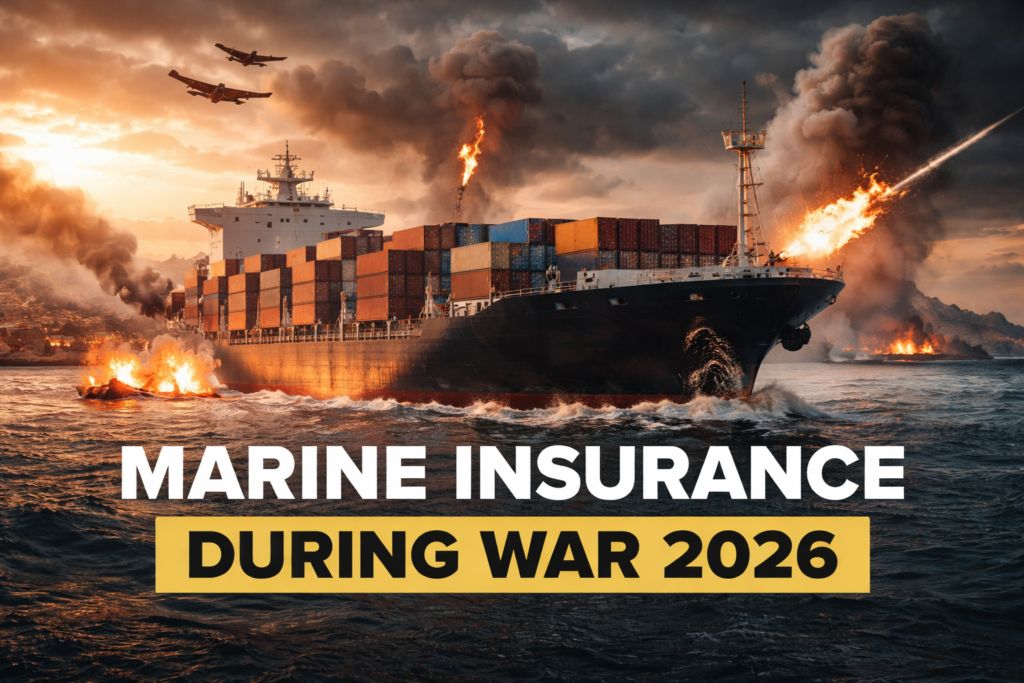
In 2026, global maritime trade is facing unprecedented risks due to ongoing conflicts, particularly in the Middle East. The tensions involving Israel, Iran, and the United States have created a dangerous environment for shipping companies, cargo owners, and international trade.
Critical shipping routes, especially the Strait of Hormuz, are heavily impacted. Blocked or unsafe waterways have disrupted supply chains, delayed cargo, and increased the risk of losses for vessels navigating these regions.
Marine insurance, which normally protects ships, cargo, and shipping operations, faces unique challenges during wartime. Standard policies often include war exclusion clauses, leaving businesses vulnerable to losses caused by military actions, piracy, or armed conflicts.
For companies that rely on maritime trade, understanding how marine insurance works during war is critical. This guide will explain what is covered, what is excluded, and how shipping companies and cargo owners can protect themselves in the current high-risk environment.
Table of Contents
Basics of Marine Insurance
Marine insurance is a specialized type of coverage designed to protect ships, cargo, and maritime operations from financial losses. It plays a crucial role in global trade, ensuring that businesses can recover if unexpected events occur during shipping.
1. What Marine Insurance Covers
Typical marine insurance policies protect against:
- Hull and Vessel Damage: Covers physical damage to the ship caused by accidents, collisions, or natural events like storms.
- Cargo Insurance: Protects the goods being transported, including loss, theft, or damage during transit.
- Freight and Liability Coverage: Includes protection for freight losses, legal liabilities, and claims arising from maritime operations.
- Port and Terminal Risks: Covers damage occurring while cargo is loaded, unloaded, or stored temporarily at ports.
2. Importance of Marine Insurance
Without marine insurance, losses from maritime accidents, piracy, or natural disasters could be financially devastating. It ensures:
- Business continuity for importers and exporters
- Protection against accidental damage to ships and cargo
- Legal and financial coverage in case of disputes or claims
3. How War Changes the Coverage Landscape
While standard marine insurance covers many accidents and natural events, war introduces additional risks that are usually excluded under standard policies:
- Damages caused by missiles, bombs, or naval attacks
- Hijacking or attacks related to armed conflict
- Blocked routes that delay or prevent cargo delivery, such as the current issues in the Strait of Hormuz
This makes specialized coverage essential for businesses operating in conflict zones or along high-risk maritime routes.
How War Affects Shipping and Cargo
The 2026 Israel–USA–Iran conflict has dramatically increased risks for maritime trade. Shipping companies, cargo owners, and insurers face multiple challenges that can disrupt operations and cause significant financial losses.
1. Direct Threats to Ships
- Military actions, missile strikes, or naval engagements in conflict zones can directly damage ships.
- Vessels navigating areas like the Strait of Hormuz are at high risk of attack or detention.
- Even passing near war zones can trigger insurance exclusions if damages occur.
2. Cargo Loss and Damage
- High-value cargo can be destroyed or delayed due to attacks, piracy, or sabotage linked to war.
- Perishable goods are especially vulnerable if shipments are delayed by closed or blocked routes.
- Standard cargo insurance often excludes losses caused by war unless a specific war risk endorsement is added.
3. Supply Chain Disruption
- Blocked waterways and unsafe ports disrupt global trade.
- Shipments may be delayed for weeks or rerouted via longer, costlier paths.
- Businesses relying on timely imports and exports face lost revenue, penalties, and dissatisfied customers.
4. Increased Operating Costs
- Fuel and insurance premiums rise sharply in high-risk zones.
- Shipping companies may incur extra costs to hire armed escorts or safer routes.
- Insurance underwriters charge higher rates for vessels operating near conflict regions.
5. Legal and Compliance Risks
- Some countries impose sanctions or restrictions on trade with nations involved in conflicts.
- Companies must navigate complex international rules to avoid fines, seizures, or legal disputes.
Simple Takeaway
War introduces both direct and indirect risks to shipping operations:
- Ships and cargo are at risk of damage or destruction
- Routes may be blocked, delaying deliveries
- Costs increase, and business continuity is threatened
This makes understanding war exclusions and specialized marine insurance critical for businesses involved in maritime trade.
The Impact of Blocked Routes like the Strait of Hormuz
The Strait of Hormuz is one of the world’s most critical maritime chokepoints. Around 20–30% of global oil passes through it, along with millions of tons of cargo. During conflicts like the 2026 Israel–USA–Iran war, blockages here have far-reaching consequences for global trade.
1. Shipping Delays and Rerouting
- Blocked or dangerous routes force ships to take longer alternative paths, increasing transit time.
- Delays can affect perishable goods, just-in-time supply chains, and international contracts.
- Example: A shipment from the UAE to Europe may take several extra days or weeks if the Strait is unsafe.
2. Rising Costs
- Fuel consumption increases for longer routes.
- Insurance premiums rise for vessels passing near conflict zones.
- Logistics and port charges may spike as ships are delayed or rerouted.
Even businesses far from the conflict region feel the financial impact.
3. Risk of Cargo and Vessel Loss
- Ships navigating through high-risk areas are vulnerable to military strikes or piracy.
- High-value cargo can be destroyed, stolen, or detained by authorities.
- Standard marine insurance often excludes war-related losses, leaving owners financially exposed.
4. Supply Chain Disruption
- Global trade flows are interrupted, affecting manufacturers, exporters, and importers.
- Delays in raw materials and components can halt production, leading to revenue losses.
- Companies relying on uninterrupted supply chains must consider alternative sourcing and contingency plans.
5. Strategic Importance for Marine Insurance
- The risk associated with the Strait of Hormuz illustrates why war risk marine insurance is essential for businesses operating in conflict regions.
- Insurance policies need to account for both physical damage and business interruption caused by blocked routes.
Simple Takeaway
- Blocked maritime chokepoints like the Strait of Hormuz create financial, operational, and logistical risks for shipping and cargo.
- Without specialized coverage, businesses are exposed to significant losses from both direct damage and delayed shipments.
War Exclusions in Marine Insurance Policies
While marine insurance protects ships, cargo, and maritime operations under normal circumstances, most standard policies include war exclusion clauses. These clauses limit or completely deny coverage for losses resulting from armed conflicts, making them highly relevant during the 2026 Israel–USA–Iran war.
1. What the War Exclusion Clause Covers
Typically, the clause excludes losses caused by:
- Declared or undeclared war between countries
- Military operations, strikes, or attacks
- Rebellion, insurrection, or civil war
- Weapons of war, including missiles and bombs
This means that if a vessel or cargo is damaged due to these events, your standard marine insurance will likely not pay for repairs, replacement, or lost cargo.
2. Direct vs. Indirect Losses
Direct Losses (Not Covered)
- A ship damaged by a missile strike
- Cargo destroyed in a naval attack
- Port facilities damaged during a conflict
Indirect Losses (Often Not Covered)
- Delays due to blocked routes like the Strait of Hormuz
- Lost revenue from postponed deliveries
- Supply chain disruptions affecting customers
Even though indirect losses may seem less obvious, insurers often deny these claims if they are linked to war events.
3. Why War Exclusions Exist
Insurance companies exclude war-related losses because:
- War risks are unpredictable and widespread
- Financial exposure can be extremely high
- Losses can affect entire fleets or global supply chains at once
Without the exclusion, insurers would face unlimited claims, making coverage financially unsustainable.
4. Exceptions and Grey Areas
- Some policies offer optional war risk endorsements or add-ons that cover specific types of conflict-related losses.
- Certain events like terrorism or civil unrest may be covered if clearly defined in the policy.
- The interpretation of “war” can vary, so reading the policy carefully is critical.
Simple Takeaway
- Standard marine insurance does not cover war-related damages or losses.
- Both direct physical damage and indirect disruptions caused by conflict are often excluded.
- Specialized coverage or endorsements are necessary for businesses exposed to war zones or high-risk shipping routes.
Specialized Coverage Options – War Risk Marine Insurance
Since standard marine insurance often excludes war-related losses, shipping companies and cargo owners operating in high-risk areas need war risk marine insurance. This specialized coverage is designed to protect vessels, cargo, and maritime operations during conflicts like the 2026 Israel–USA–Iran war.
1. What War Risk Marine Insurance Covers
War risk policies can include coverage for:
- Hull Damage: Physical damage to ships caused by missiles, bombs, naval attacks, or military operations.
- Cargo Loss or Damage: Protection for goods destroyed, stolen, or damaged in conflict zones.
- Business Interruption: Compensation for delays, rerouting, or blocked ports like the Strait of Hormuz.
- Political Violence: Acts of terrorism, riots, or sabotage linked to war events.
- Port and Terminal Risks: Losses during loading, unloading, or temporary storage in high-risk areas.
2. Who Needs War Risk Marine Insurance
- Shipping Companies: Protects vessels navigating conflict-prone regions.
- Cargo Owners/Exporters: Ensures high-value goods are covered against war-related risks.
- Multinational Trade Companies: Protects supply chains dependent on ports or routes affected by conflict.
Businesses operating along major chokepoints like the Strait of Hormuz or near Middle East conflict zones are particularly vulnerable.
3. Cost Considerations
- War risk insurance is more expensive than standard marine coverage.
- Premiums are calculated based on risk level, route, cargo value, and duration of exposure in conflict zones.
- Despite the higher cost, it provides essential financial protection against catastrophic losses.
4. Limitations
Even war risk insurance has limits:
- Some policies exclude nuclear, chemical, or biological attacks.
- Indirect losses not directly linked to war may not be covered.
- Documentation and proof of war-related loss are required to file claims successfully.
Simple Takeaway
- War risk marine insurance fills the gap left by standard policies.
- It is essential for shipping companies and cargo owners exposed to conflict zones or high-risk maritime routes.
- While more costly, it offers critical protection against both direct damage and operational disruptions caused by war.
Political Risk and Marine Operations
Beyond physical damage from war, businesses involved in maritime trade face political and regulatory risks that can disrupt operations. Political risk insurance (PRI) complements marine and war risk coverage by protecting against losses caused by government actions, sanctions, and instability.
1. What Political Risk Insurance Covers
PRI for marine operations can protect against:
- Expropriation or Seizure of Cargo: When a government confiscates or restricts goods in transit.
- Trade Sanctions and Embargoes: Financial losses resulting from sudden restrictions on imports or exports.
- Contract Frustration: Losses due to governments refusing to honor shipping or trade contracts.
- Civil Unrest and Political Violence: Damage caused by riots, strikes, terrorism, or politically motivated attacks.
2. Why Political Risk Matters in 2026
- The Israel–USA–Iran conflict has led to sanctions, trade restrictions, and blocked routes affecting international shipping.
- Even if a vessel avoids physical damage, government-imposed restrictions can delay deliveries or make cargo inaccessible.
- Political risk insurance can compensate for financial losses that standard or war risk marine insurance does not cover.
3. Who Should Consider PRI
- Exporters and Importers: Companies shipping goods to or from high-risk regions.
- Shipping Companies: Operators navigating areas where political instability can affect routes or ports.
- Investors in Maritime Projects: Firms with financial stakes in ports, terminals, or fleets in unstable countries.
4. Limitations
- PRI policies may exclude certain types of political actions, such as minor local disturbances.
- Premiums are influenced by the perceived risk of the country or route.
- Documentation is crucial to prove that financial losses resulted from political risk events.
Simple Takeaway
- Political risk insurance protects financial interests rather than physical assets.
- In conflict zones like those affected by the 2026 Israel–USA–Iran war, PRI ensures businesses can recover from government-imposed losses and trade disruptions.
- Combining PRI with war risk insurance offers more comprehensive protection for maritime operations.
Real-World Examples – 2026 Conflict Impact on Marine Trade
The ongoing 2026 Israel–USA–Iran war has already demonstrated how conflicts can disrupt maritime operations. Shipping companies and cargo owners are facing direct and indirect challenges, highlighting the importance of specialized marine insurance.
1. Delays and Blocked Routes
- Key shipping lanes like the Strait of Hormuz are unsafe due to military activity.
- Ships are forced to take longer, alternative routes, increasing transit time and operational costs.
- Example: Oil shipments from the Persian Gulf to Europe are delayed by days or weeks, impacting supply chains globally.
2. Damage to Ships and Cargo
- Vessels navigating conflict-prone areas face a higher risk of missile strikes, sabotage, or piracy.
- Cargo can be destroyed or seized during hostilities, especially high-value shipments like electronics, machinery, or oil.
- Example: Some tanker shipments have been detained temporarily due to escalating naval conflicts.
3. Rising Costs and Premiums
- Insurance premiums for vessels in the region have surged due to increased risk.
- Fuel and operating costs rise as ships take longer routes or hire additional security escorts.
- Businesses experience financial pressure even if physical damage does not occur.
4. Supply Chain Disruptions
- Exporters and importers report delayed deliveries affecting production schedules.
- Perishable goods are at risk of spoilage due to extended transit times.
- Companies relying on uninterrupted supply chains must seek alternatives or absorb losses.
5. Legal and Regulatory Impacts
- Sanctions or trade restrictions imposed by governments affect shipping schedules and cargo legality.
- Companies risk fines or seizure of goods if regulations are not strictly followed.
- Political risk insurance can mitigate some of these financial losses.
Simple Takeaway
- The 2026 conflict illustrates that maritime trade is vulnerable to war, blocked routes, and political risks.
- Standard marine insurance often falls short in these scenarios.
- War risk and political risk coverage, combined with strategic planning, are essential to protect vessels, cargo, and revenue.
How Businesses Can Protect Their Cargo and Fleet
Given the high risks in 2026 due to the Israel–USA–Iran conflict and blocked shipping routes like the Strait of Hormuz, shipping companies and cargo owners must take proactive steps to safeguard operations.
1. Review Existing Marine Insurance Policies
- Examine current policies for war exclusion clauses.
- Identify which types of losses are covered and which are excluded.
- Check if terrorism, civil unrest, or political violence endorsements are included.
2. Invest in Specialized Coverage
- War Risk Marine Insurance: Protects vessels and cargo from damage caused by armed conflict.
- Political Risk Insurance (PRI): Covers losses from government actions, sanctions, or civil unrest.
- These policies are essential for operations in high-risk maritime zones.
3. Diversify Shipping Routes
- Avoid relying solely on high-risk routes like the Strait of Hormuz.
- Explore alternative ports and transit paths to minimize exposure.
- Use multiple suppliers or shipping partners to reduce dependence on a single route.
4. Implement Emergency Response Plans
- Develop procedures for crew safety, cargo security, and operational continuity.
- Prepare for temporary route changes or delays caused by conflict.
- Establish communication protocols with ports, suppliers, and clients.
5. Monitor Global Geopolitical Developments
- Stay updated on military activity, sanctions, and trade restrictions.
- Anticipate risks and adjust shipping schedules accordingly.
- Early awareness can reduce both financial and operational losses.
6. Maintain Financial Buffers
- Allocate funds to absorb unexpected costs such as rerouting, increased insurance premiums, or delayed deliveries.
- Even a small financial reserve can prevent disruptions from becoming catastrophic.
Simple Takeaway
- Protecting maritime operations in conflict zones requires insurance, strategic planning, and operational flexibility.
- Combining war risk coverage, political risk insurance, and proactive risk management ensures cargo and fleet safety even during global conflicts.
Small vs Large Shipping Companies
The 2026 Israel–USA–Iran conflict has affected maritime operations worldwide, but the impact varies significantly depending on the size and resources of the shipping company.
1. Small Shipping Companies
- Limited Financial Reserves: Small operators often cannot absorb losses caused by blocked routes, delayed shipments, or cargo damage.
- Limited Access to Specialized Insurance: War risk or political risk insurance may be too expensive for smaller fleets.
- Operational Vulnerability: Delays or disruptions can halt operations completely.
- Examples:
- A small regional cargo company may be forced to cancel shipments due to increased risk in the Strait of Hormuz.
- Small exporters may face penalties for late deliveries or lost contracts.
2. Large Shipping Companies
- Better Risk Management: Large companies have dedicated risk management teams and contingency plans.
- Access to Specialized Insurance: War risk and political risk coverage are affordable and comprehensive.
- Global Diversification: Fleets and cargo operations can be rerouted or shifted to safer regions.
- Examples:
- Multinational shipping companies can reroute vessels, hire additional security, or adjust schedules with minimal revenue loss.
- Large exporters maintain supply chains despite delays in conflict-prone areas.
3. Key Differences
| Factor | Small Shipping Companies | Large Shipping Companies |
|---|---|---|
| Financial Resilience | Low | High |
| Access to Specialized Insurance | Limited | Strong |
| Operational Flexibility | Low | High |
| Vulnerability to War | High | Moderate |
Simple Takeaway
- Small shipping companies are highly vulnerable to war-related disruptions and uninsured losses.
- Large companies are better equipped but still face operational and financial challenges.
- Both must carefully assess risks and consider specialized coverage to mitigate the impact of conflict.
Key Clauses to Check in Marine Insurance Policies
Before a conflict like the 2026 Israel–USA–Iran war impacts shipping operations, it’s essential for businesses to review their marine insurance policies carefully. Understanding key clauses can prevent costly surprises and ensure appropriate protection.
1. War Exclusion Clause
- Most standard marine insurance policies exclude war-related losses.
- Check the exact wording to know which events—missile strikes, naval attacks, or civil war—are not covered.
- Knowing these exclusions helps decide whether war risk coverage is necessary.
2. Coverage Limits
- Confirm the maximum payout for both ships and cargo.
- Ensure limits are sufficient for high-value vessels or cargo, especially in conflict zones.
- Specialized endorsements may offer higher limits for war or political risk events.
3. Optional Endorsements
- Policies may allow add-ons for events usually excluded, such as:
- War risk insurance
- Terrorism or political violence coverage
- Civil unrest protection
- Check availability and costs for these endorsements.
4. Claim Requirements
- Understand documentation and proof needed to file a claim.
- Some insurers require evidence that loss was directly caused by a covered event, particularly for war-related claims.
- Maintain logs, photos, and shipment records to support claims.
5. Policy Definitions
- Terms like “war,” “terrorism,” “civil commotion,” or “political violence” can vary between insurers.
- Verify how your policy interprets these terms to avoid disputes during claims.
6. Renewal and Updates
- Regularly review and update your policy, especially when geopolitical risks increase.
- Ensure your coverage aligns with current shipping routes, cargo types, and operational risks.
Simple Takeaway
- Key clauses determine what your marine insurance actually protects.
- Careful review of exclusions, limits, endorsements, and definitions is essential, particularly during times of war.
- Proactive planning allows businesses to identify gaps and secure specialized coverage if needed.
Expert Tips for 2026
The ongoing 2026 Israel–USA–Iran conflict highlights the need for shipping companies and cargo owners to take proactive measures. Experts recommend a combination of insurance, planning, and operational strategies to reduce exposure to war-related risks.
1. Don’t Rely Only on Standard Insurance
- Standard marine insurance usually does not cover war-related losses.
- Businesses should consider war risk insurance and political risk insurance for comprehensive protection.
2. Monitor Geopolitical Events
- Stay informed about military activity, sanctions, and trade restrictions.
- Anticipating risks allows shipping schedules and routes to be adjusted proactively.
- Example: Knowing when the Strait of Hormuz is unsafe can prevent ships from entering high-risk zones.
3. Diversify Routes and Ports
- Avoid relying on a single route or port.
- Use alternative shipping lanes to reduce exposure to blocked or dangerous areas.
- Diversification also helps maintain supply chain continuity during conflicts.
4. Maintain Contingency Plans
- Establish protocols for crew safety, cargo security, and operational continuity.
- Plan for rerouting, temporary storage, or delayed deliveries.
- Clear communication with suppliers, clients, and ports is essential.
5. Consult Insurance Professionals
- Work with advisors experienced in war risk and political risk marine insurance.
- Tailor policies to your routes, cargo types, and operational exposure.
- Advisors can also help interpret complex clauses and recommend endorsements.
6. Keep Financial Reserves
- Maintain emergency funds to cover unexpected expenses like rerouting, higher premiums, or lost revenue.
- Even modest reserves can prevent disruptions from escalating into financial crises.
7. Document Everything
- Keep detailed records of cargo, routes, financial transactions, and communications.
- Proper documentation is critical for successfully filing claims under specialized insurance policies.
Simple Takeaway
- Navigating maritime operations in 2026 requires a strategic approach combining insurance, planning, and operational flexibility.
- By monitoring risks, diversifying routes, and securing specialized coverage, businesses can protect cargo, fleets, and revenue during the Israel–USA–Iran conflict.
Conclusion
The 2026 Israel–USA–Iran conflict has underscored how vulnerable maritime trade can be during times of war. Ships, cargo, and supply chains face both direct and indirect risks, from missile attacks and piracy to blocked routes like the Strait of Hormuz and trade sanctions.
Standard marine insurance policies typically exclude war-related losses, leaving businesses exposed to significant financial risks. Specialized coverage, such as war risk marine insurance and political risk insurance, provides protection for both physical assets and financial losses caused by political or military disruptions.
Shipping companies and cargo owners can further reduce risk by:
- Reviewing insurance policies for exclusions and limits
- Investing in war risk and political risk coverage
- Diversifying shipping routes and ports
- Developing contingency and emergency response plans
- Monitoring geopolitical developments continuously
- Maintaining financial reserves to absorb unexpected costs
Proactive planning, combined with the right insurance coverage, ensures that businesses can safeguard operations and protect revenue even in conflict zones. The key takeaway is that in 2026, marine insurance alone isn’t enough—strategic risk management is essential for surviving and thriving during global conflicts.